Introduction:
For decades, retinopathy of prematurity (ROP) posed a devastating and seemingly unconquerable threat to the vision of premature infants, often leading to severe visual impairment and blindness. The history of ROP is a story of medical and technological progress, driven by tireless research and clinical innovation. At Chitkara Perfect Eye & Retina Centre, we honor this legacy by combining our deep understanding of ROP’s complex past with the most advanced diagnostic and treatment tools available today to protect the vision of the most vulnerable patients.
A Historical Journey: The "Epidemics" of ROP
The story of ROP unfolds in three distinct “epidemics,” mirroring key developments in neonatal medicine.
- The First Epidemic (1940s-1950s): During this period in high-income countries, the introduction of supplemental oxygen for premature infants led to a tragic surge in ROP-related blindness. Initially, doctors were unaware that high, unregulated oxygen levels caused the abnormal retinal blood vessel growth, then known as “retrolental fibroplasia”. Once this link was established, oxygen use was carefully restricted, and the number of ROP cases declined significantly.
- The Second Epidemic (1970s-1980s): As advancements in neonatal intensive care units (NICUs) improved survival rates for smaller, more fragile infants, ROP cases reappeared. The focus shifted from overall oxygen restriction to precise monitoring and management of oxygen levels, along with other risk factors. This era also saw the development of the International Classification of Retinopathy of Prematurity (ICROP) to standardize diagnosis and staging.
- The Third Epidemic (1990s-Present): With the globalization of advanced neonatal care, ROP has emerged as a growing cause of childhood blindness in low- and middle-income countries. In these regions, a combination of increased preterm survival and varying standards of care, including inconsistencies in oxygen regulation, has driven a new wave of ROP cases.
The Present: Cutting-Edge ROP Care
Today, our understanding of ROP is far more sophisticated. We recognize that premature birth is the primary risk factor, but other variables like oxygen fluctuations, poor weight gain, infections, and genetics can also contribute. At Chitkara Perfect Eye & Retina Centre, we are equipped with state-of-the-art tools and treatment methods to safeguard your baby’s vision.
Our ROP Diagnostic and Treatment Services:
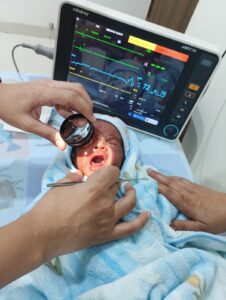
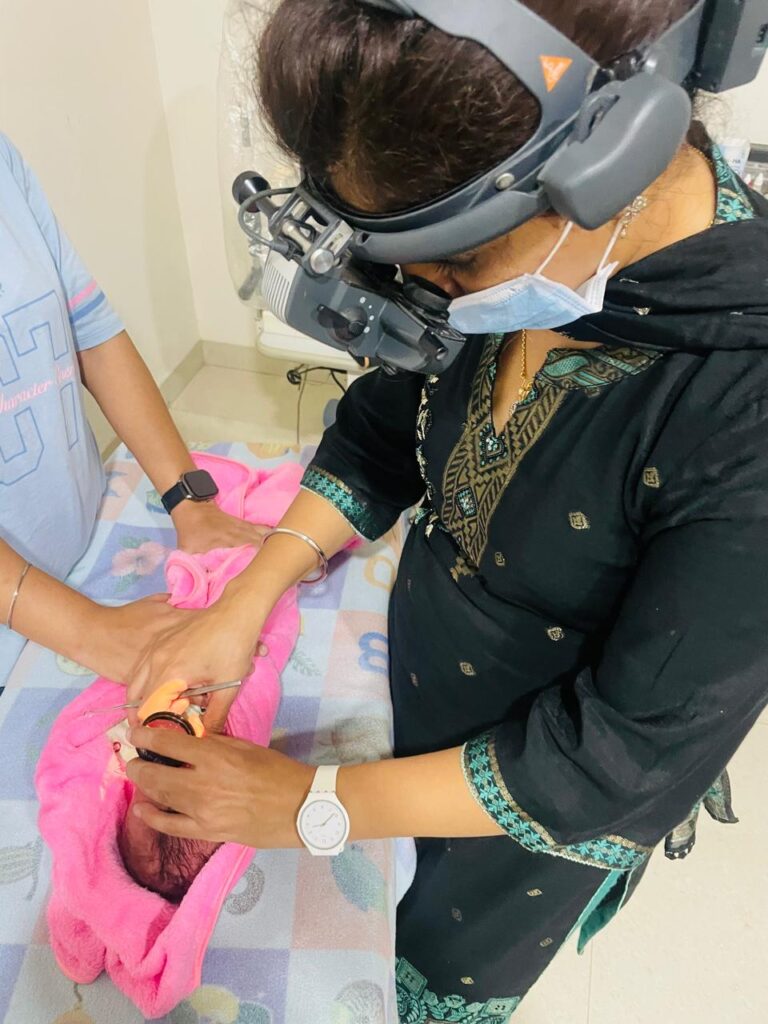
- Expert Screening: Our highly skilled ophthalmologists conduct comprehensive, dilated eye exams to check for early signs of ROP. We adhere to the latest national and international screening protocols to ensure timely detection, which is critical for the best possible outcome.
- Laser Photocoagulation: As a cornerstone of ROP treatment, laser therapy is used to painlessly create tiny burns in the peripheral (outer) retina to halt the growth of abnormal blood vessels. This prevents the vessels from leaking, scarring, or causing a retinal detachment.
- Surgical Intervention: In advanced cases where retinal detachment has occurred (Stages 4 and 5), we can perform delicate surgical procedures such as scleral buckling or vitrectomy to reattach the retina. While these cases have a guarded prognosis, our experienced surgeons work tirelessly to maximize visual potential.
Why Choose Chitkara Perfect Eye & Retina Centre?
Our commitment to excellence in ROP care is unparalleled.
- Advanced Expertise: Our team of pediatric ophthalmologists and vitreoretinal specialists has extensive experience in diagnosing and treating all stages of ROP.
Collaborative Approach: We work closely with neonatologists and other specialists to provide a seamless, multidisciplinary care plan for your baby from the NICU to follow-up visits. - Compassionate Care: We understand that a diagnosis of ROP can be frightening for parents. We provide clear communication, emotional support, and the latest information to help you navigate your baby’s care.
- Long-Term Follow-up: ROP can lead to other eye issues later in life, such as high myopia, strabismus, and amblyopia. We provide a customized, long-term follow-up schedule to monitor your child’s visual health and address any potential problems.